Why the Human Element Still Matters in Design
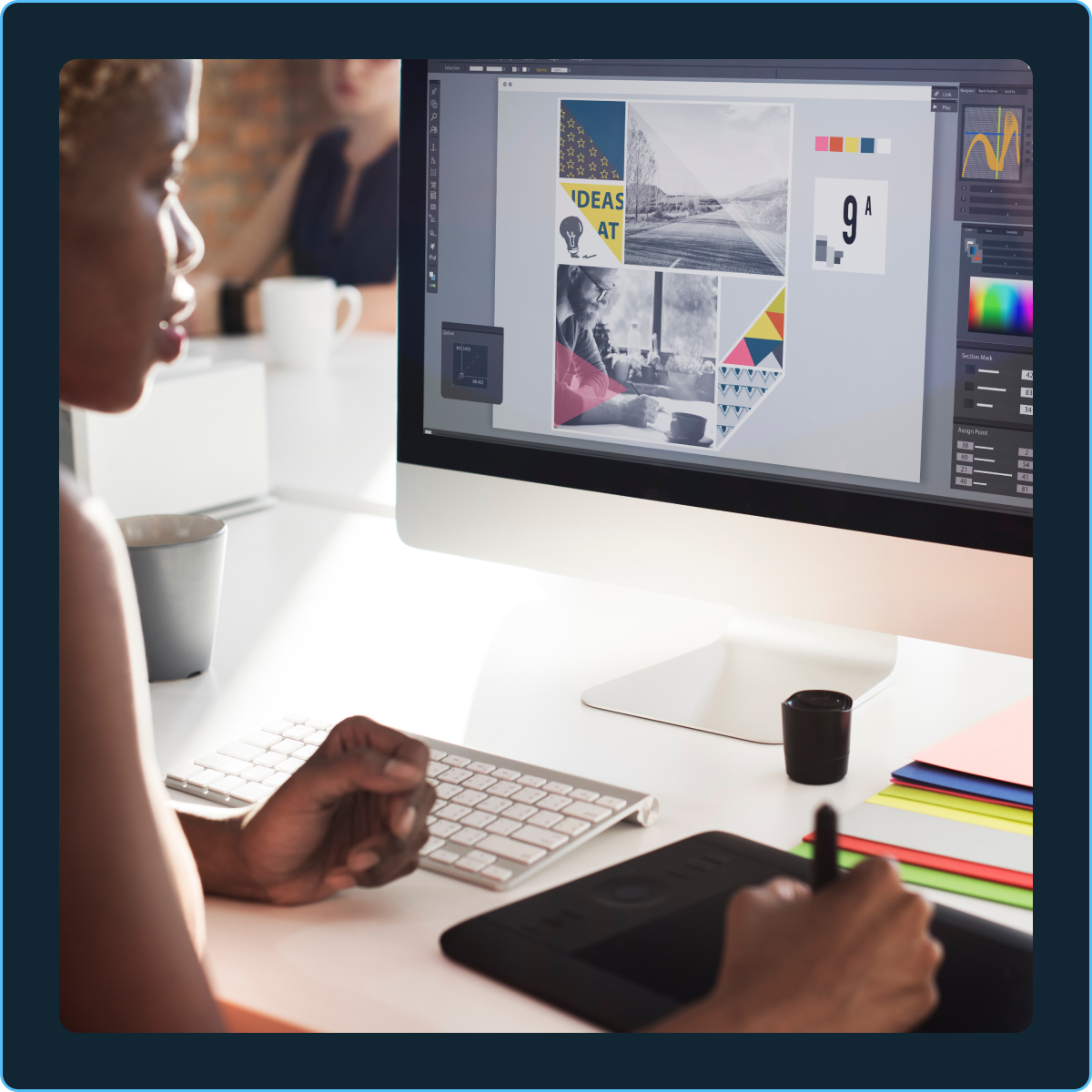
Why the Human Element Matters in Design.
There is a moment in every great creative partnership where something clicks. The brief is understood not just intellectually but instinctively. The designer has synergy with you and your brand. They know the next step before it happens. That moment is not a feature any AI tool can replicate. It is the product of time, trust, and something harder to quantify — the human element.
For companies in enterprise technology, cybersecurity, healthcare technology, and life sciences, brand design is not optional. It builds trust and clarifies complex ideas. Today, the human element is essential to make your brand stand out.
What Is the Human Element in Design?
What exactly is the human element in design? It encompasses the judgment, emotion, taste, and relationship that a seasoned creative brings to every project. These qualities set designs apart— between those that are merely correct and those that are unmistakably yours. They are earned through experience and creative thought, not through prompts.
A Relationship That Compounds Over Time.
This human connection especially matters over time. One of the most undervalued assets in any creative engagement is continuity and creative nuance. A designer who has worked with your brand through multiple iterations, rebrands, product launches, regulatory shifts, and leadership changes carries institutional knowledge that no onboarding document can transfer. For technology brands with complex information, this depth of understanding becomes invaluable.
They know your stakeholders. They know which directions your legal team will flag. They know that your CMO hesitates before saying yes to anything too bold, and they know how to bring them along. They can build a creative vision across months, working fluidly with internal marketing teams, external partners, sales leadership, and executive sponsors — without losing the thread.
That kind of creative partner is not a vendor. They are a strategic asset.
Common question: What is the value of a long-term design relationship? It compounds over time. Each project makes the next one more efficient and aligned, as the relationship does the heavy lifting that briefing documents can't.
Human Intuition Cannot Be Prompted.
A seasoned creative hears what you are not saying.
When a client pauses before saying they like a concept, a skilled designer catches it. That half-second of hesitation is intuition. It cues the designer to dig deeper to understand the source of that hesitation and why it exists. Asking the right questions and getting the real answers to the why. A creative partner with this intuition, brand, and product knowledge is a powerful asset that adds value through strategic creative thinking.
AI tools optimize for the response you give, not the one you mean. They cannot hear the nuance in the hesitation or read the room. They cannot follow up with the right question at the right moment to get to the truth beneath the feedback.
Human intuition in design is not a soft skill in complex industries where the stakes of miscommunication are high; it is a critical one.
Listening Is a Design Skill.
The brand moments that endure are not the product of the best software or the fastest turnaround. They are shaped by someone who listens.
In healthcare technology and life sciences, carefully crafted visuals reinforce your credibility and expertise. In cybersecurity, a distinctive brand presence reassures clients that your solution is unique and reliable. In technology, where buying cycles are long and trust is paramount, a thoughtfully developed brand sets you apart and inspires confidence.
Listening means understanding not just what the deliverable is, but what is at stake. What this launch means to the team that built it. What this rebrand means to the founder who started the company in a garage. What this campaign means for the sales team that has been waiting for it for 6 months.
That context shapes every decision a human designer makes. It does not make it into a prompt.
Taste Is Not Universal. Great Designers Know the Difference.
What "modern" means to a cybersecurity firm is not what it means to a life sciences company. What "trustworthy" looks like for a healthcare technology platform is not what it looks like for an enterprise SaaS brand.
A seasoned creative knows how to adjust by instinct and thoughtful purpose. This instinct influences choices: using white space more for balance, selecting typefaces that convey the right tone, and choosing colors to match brand personality.
The design instinct is cultivated over years of work across industries, clients, experiences, and contexts. This seasoned knowledge is irreplaceable and brings great value to the outcome of a brand or project. This alone distinguishes these unsung heroes of design as great designers within a sea of average designers.
Algorithm-Driven Design Is the New Overly Posed Stock Image.
AI-generated design is fast, cheap, and can be statistically pleasing. AI pulls from what has worked broadly, assembles it cleanly (sometimes), and delivers something that is deemed good enough. It is the visual equivalent of a stock photo: recognizable, inoffensive, and completely interchangeable with a hundred other brands.
That is the problem.
For companies, it is a disadvantage when competing in a crowded, high-trust industry where forgettable is not an ideal outcome. Your brand is often the first point of interaction for each prospect. Prospects interacting with your brand for the first time will learn about who you are and whether you can be trusted with their unique pain point, their product data, or their security brand posture. A design that looks like everyone else's is not just a missed opportunity — it is a misrepresentation.
Common question: Can AI tools create a unique brand design system? The same tools, given the same prompts, could produce similar outputs at scale. When an entire market segment uses the same generative tools, visual overlap can occur, eroding your brand's ability to be truly unique. With generative AI, you risk your brand disappearing into an algorithmic pattern. While working with a design team, you can stand out and create a visual language that aligns with your story, goals, and mission.
Real-World Knowledge That Feels like the Real Thing and not a Dataset.
There are things a designer knows that cannot be learned from a dataset.
They know how a finished piece feels in your hand — whether the paper stock communicates premium or cheap, whether the weight of a folder signals confidence or cost-cutting. They know how a specific image will land in a digital channel full of skeptical enterprise buyers, and how a different one will open the conversation rather than close it.
They know that a design that looks perfect on screen can fall apart in print. When a piece does not translate from digital to physical, or from social to animation, a human is there to adjust in real time. No AI tool is on-site when the signage arrives at the conference, and the colors are off. No AI tool has your back when the animation doesn’t work in social.
That real-world, tactile, situational knowledge is built from years of design experience. It lives in the designer, not the software. Designers are not just button pushers; they are problem solvers, visionaries, and creative thinkers who see each project through.
Your Data Is Someone Else's Training Set.
When you use AI design tools, your inputs, briefs, brand assets, feedback, and iterations are often used to train future models. For most industries, that is an acceptable tradeoff.
For companies in cybersecurity, technology, healthtech, and life sciences, it is worth taking a closer look. As you prompt your way to your next design, take a minute to understand the information you’re inputting. Would you share this information publicly?
On the other hand, human design partners operate under confidentiality agreements, professional ethics, and a relationship built on discretion. Your brand strategy stays between you and the designer.
The Human Creative Signature.
Every project a skilled designer touches carries something unique: a perspective formed by instinct and years of experience, not probability, and reflecting an understanding of your goals.
That is the human creative signature. It is not based on any dataset, but on original creative thought. For “good enough,” AI works. But for real differentiation, only human creative thought, strategy, and emotion suffice.
DC&Co is a graphic design studio specializing in enterprise technology, cybersecurity, healthcare technology, and life sciences. We build brands, design systems, and creative partnerships that compound over time.

Jason Drury is the Founder and Creative Director of DC&Co, a design studio that partners with tech startups, cybersecurity firms, and healthtech companies on branding, digital experiences, and marketing design. With over 25 years in the creative industry, he has led brand work for companies including Demandware and Progress Software and has run his own studio for over a decade before founding DC&Co in 2018. His work spans brand identity, motion design, web design, and print, with a focus on bold, strategic visual solutions for technology-driven brands. Jay is based in Bedford, New Hampshire.
Resources
All Posts


We're a design studio founded on passion, focus, and service.
Address
264 South River Road
STE 502
Bedford, NH 03110
Project Inquiries
Careers


